Quick Summary
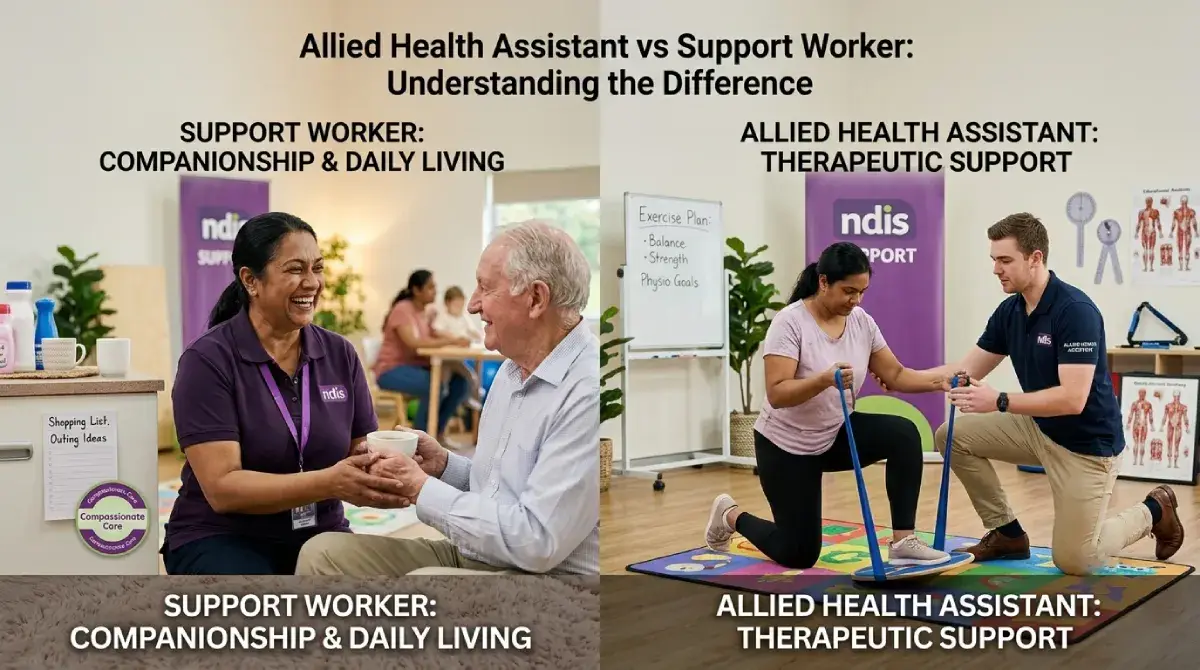
An Allied Health Assistant and a Support Worker can both help NDIS participants, but their roles are different.
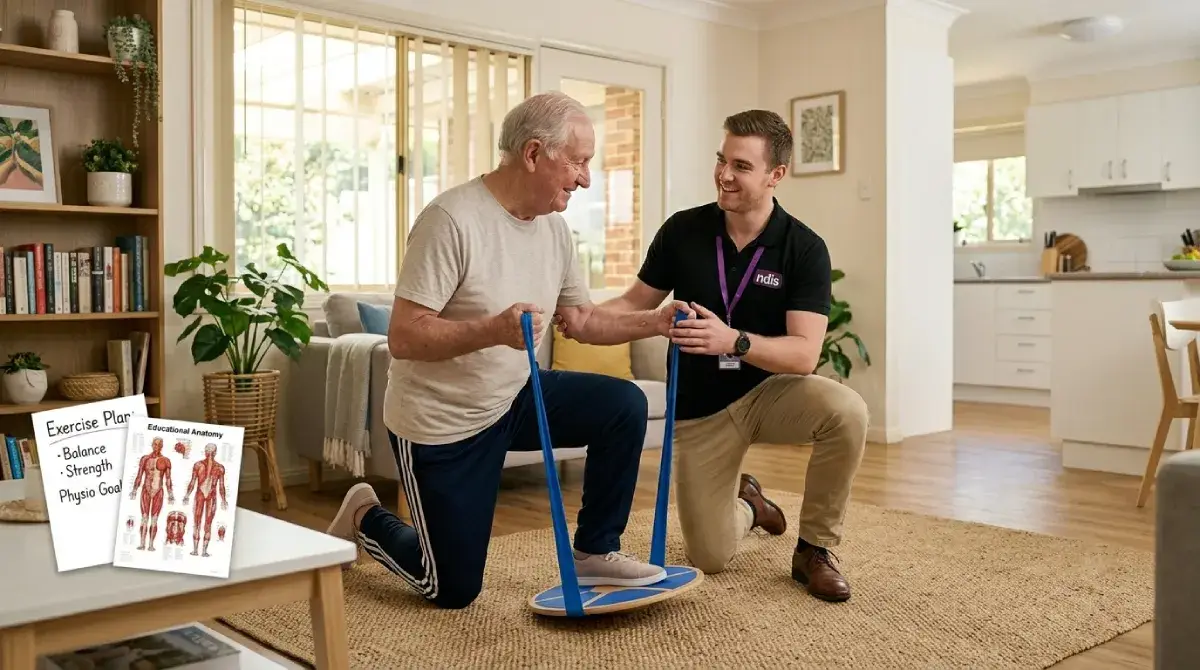
An allied health assistant, also known as a therapy assistant, usually helps a participant practise therapy-related activities under the supervision or direction of an allied health professional. This may include support with therapy goals, exercises, communication practice, daily living skills, and independence-building activities.
A support worker usually helps with everyday support needs such as daily routines, personal assistance, community access, social participation, appointments, and general independence.
Both roles can be valuable. The right choice depends on the participant’s NDIS goals, therapy plan, support needs, and daily routine.
We provide both Allied Health Assistant support and NDIS Support Work across South East Melbourne.
Why Understanding the Difference Matters
Many families, carers, and NDIS participants are unsure whether they need an allied health assistant or a support worker.
This confusion is common because both roles can support independence, daily routines, and community participation. However, the difference comes down to the purpose of the support.
If the participant needs help practising therapy-related strategies set by an allied health professional, an allied health assistant may be more suitable.
If the participant needs help with daily activities, transport, social participation, routines, or community access, a support worker may be the better fit.
The NDIS focuses on supports that help participants work towards their individual goals, so choosing the right type of support is important.
What Is an Allied Health Assistant?
An Allied Health Assistant is a trained support person who helps deliver parts of a therapy program under the guidance of an allied health professional.
The NDIS explains that therapy assistants are sometimes called “allied health assistants” and can deliver specific therapy support programs under supervision or delegation from an allied health professional.
An allied health assistant may work under the direction of professionals such as:
- Occupational therapists
- Speech pathologists
- Physiotherapists
- Psychologists
- Exercise physiologists
- Other allied health professionals
Their role is not to diagnose, assess, or create therapy plans. Instead, they help the participant practise therapy-related activities that have already been recommended by the treating professional.
For example, if an occupational therapist creates a daily living skills program, an allied health assistant may support the participant to practise those skills at home.
You can learn more about this service on our Allied Health Assistant support page.
What Does an Allied Health Assistant Do?
An allied health assistant may help with practical therapy-related activities such as:
Practising Therapy Goals
They may help participants complete activities recommended by an occupational therapist, speech pathologist, physiotherapist, or another allied health professional.
This may include routines, communication activities, movement-based exercises, or daily living skill development.
Supporting Daily Living Skill Development
They may help participants practise skills such as:
- Personal routines
- Organisation
- Meal preparation
- Household tasks
- Following instructions
- Building independence at home
This is different from simply completing the task for the participant. The goal is usually to help the participant build capacity and confidence.
Helping Between Therapy Appointments
Many participants need support between appointments to keep practising what their therapist has recommended.
For this type of support, in-home therapy assistant support may be useful because it allows participants to practise therapy goals in familiar environments.
Supporting Children with Therapy Goals
For children, they support may help with routines, social interaction, communication practice, motor skills, or independence-building activities.
Families can also explore therapy assistant support for children if their child needs structured support connected to NDIS goals.
Supporting Adults with Therapy Goals
For adults, allied health assistant support may help with independence, confidence, daily living routines, communication, and community-based skill development.
You can also review our adult therapy support service for more adult-focused support options.
What Is a Support Worker?
A Support Worker helps NDIS participants with everyday activities, routines, and participation in daily life.
This support is usually more focused on practical assistance, independence, and community access rather than therapy program delivery.
They may help with:
- Daily routines
- Personal support
- Community access
- Social participation
- Transport to appointments
- Shopping or errands
- Building confidence outside the home
- General independence support
The NDIS Commission explains that disability support work should be person-centred, responsive to participant preferences, and designed to fit into daily routines.
The NDIS Support Work service of All For You Therapy provides practical daily support to children and adults across South East Melbourne.
What Does a Support Worker Do?
They may assist with a wide range of everyday needs.
Daily Routine Support
Support workers can help participants follow daily routines, stay organised, and manage everyday tasks more confidently.
This may include morning routines, meal routines, household tasks, or preparing for community activities.
Community Access
Some participants need support to leave the home, attend appointments, visit local places, or participate in social activities.
A Support Worker may help the participant feel safer and more confident in the community.
For participants working on social confidence or community involvement, Community Participation Support may also be relevant.
Social Participation
Support Workers may assist participants to take part in social, recreational, or community-based activities.
This can help reduce isolation and support confidence in real-world settings.
Practical Everyday Assistance
Support Workers may also help with everyday tasks such as:
- Shopping
- Transport
- Attending appointments
- Using public spaces
- Building confidence with routines
- Staying engaged in the community
This type of support can be important for participants who need consistent help in daily life.
Main Difference Between an Allied Health Assistant and a Support Worker
The main difference is the type of support being delivered.
An Allied Health Assistant supports therapy-related goals under the guidance of an allied health professional.
A Support Worker supports daily living, routines, independence, and community participation.
Here is a simple comparison:
| Area | Allied Health Assistant | Support Worker |
|---|---|---|
| Main focus | Therapy-related support | Daily living and community support |
| Works under therapist direction | Yes, usually | Not always |
| Delivers therapy activities | Yes, when delegated | Usually no |
| Helps with daily routines | Yes, if linked to therapy goals | Yes |
| Supports community access | Sometimes, if part of therapy goals | Yes |
| Creates therapy plans | No | No |
| Replaces therapist | No | No |
| Best for | Practising therapy goals | Sometimes, if part of the therapy goals |
Example: When an Allied Health Assistant Is Better
They may be more suitable when the participant has a therapy plan and needs help practising specific activities.
For example:
A child is working with a speech pathologist on communication goals. The therapist recommends regular practice between appointments. They may help the child practise those activities in a structured way.
Another example:
An adult is working with an occupational therapist to improve daily living skills. They may help the participant practise routines at home, following the therapist’s guidance.
In these cases, the support is connected to therapy goals.
Example: When a Support Worker Is Better
They may be more suitable when the participant needs practical help with daily life or community access.
For example:
A participant needs support getting to appointments, going shopping, attending social activities, or building confidence in the community.
Another example:
A participant needs help with daily routines, staying organised, or taking part in everyday activities.
In these cases, the support is more focused on daily life and independence rather than therapy program delivery.
Can One Person Be Both an Allied Health Assistant and a Support Worker?
Sometimes, a worker may have experience across both areas. However, the role they perform should be clear.
If they are supporting therapy-related activities under the direction of an allied health professional, they are acting more like an Allied Health Assistant.
If they are helping with general daily living, community access, and practical support, they are acting more like a Support Worker.
The important thing is that the participant, family, provider, and therapist understand what type of support is being delivered and why.
Which One Do You Need Under the NDIS?
The right option depends on the participant’s goals and support needs.
You may need an Allied Health Assistant if:
- A therapist has recommended regular practice
- The participant has therapy-related goals
- Support is needed between therapy appointments
- The participant needs help practising exercises, routines, or strategies
- The goal is to build capacity through structured therapy support
You may need a Support Worker if:
- The participant needs help with daily activities
- The participant needs community access support
- The participant needs help attending appointments
- The participant needs practical routine-based support
- The goal is everyday independence and participation
The NDIS describes therapeutic supports as services that help participants improve functional abilities, develop skills, and increase independence in daily life.
Why Both Roles Can Work Together
In many cases, an Allied Health Assistant and Support Worker can both be useful.
For example, an Allied Health Assistant may help the participant practise therapy-related routines, while a Support Worker may help the participant use those skills during everyday activities.
This can create stronger support around the participant because therapy goals are not separated from daily life.
For example:
- The therapist creates the plan
- The Allied Health Assistant helps to practise the plan
- The Support Worker helps the participant apply independence in daily routines
- The family or carer supports consistency at home
This approach can help therapy goals become more practical and easier to maintain.
Allied Health Assistant and Support Worker Services in South East Melbourne
All For You Therapy provides both Allied Health Assistant support and NDIS Support Work across South East Melbourne.
We support participants in areas such as:
- Dandenong
- Cranbourne
- Berwick
- Narre Warren
- Frankston
- Surrounding South East Melbourne suburbs
Our services focus on practical, person-centred support for children, adults, families, and carers.
Whether you need therapy-related support, daily living assistance, community access, or help building independence, our team can help you understand which support option may suit your needs.
To discuss support options, you can contact All For You Therapy.
Final Thoughts
They both play important roles in NDIS support, but they are not the same.
An Allied Health Assistant is usually best when the participant needs help practising therapy goals under the guidance of an allied health professional.
A Support Worker is usually best when the participant needs help with daily routines, community access, social participation, and everyday independence.
For many participants, the best approach may involve both types of support working together around the participant’s goals.
Get In Touch
Not sure whether you need an Allied Health Assistant or a Support Worker?
Contact All For You Therapy to discuss your NDIS goals and support needs. Our team provides allied health assistant support, NDIS support work, in-home therapy support, and community participation support across South East Melbourne.
FAQs
What is the difference between an Allied Health Assistant and a Support Worker?
An Allied Health Assistant helps participants practise therapy-related activities under the guidance of an allied health professional. A Support Worker helps with daily routines, community access, practical support, and everyday independence.
Is an Allied Health Assistant the same as a Therapy Assistant?
Yes, in many NDIS settings, an Allied Health Assistant may also be called a therapy assistant. They help deliver parts of a therapy support program under supervision or delegation from an allied health professional.
Can a Support Worker do therapy activities?
A Support Worker may support general routines and daily activities, but therapy-related activities should usually be guided by an allied health professional. If the support involves therapy goals, an Allied Health Assistant may be more appropriate.
Does an Allied Health Assistant replace a therapist?
No. An Allied Health Assistant does not replace an occupational therapist, speech pathologist, physiotherapist, or other allied health professional. They help carry out parts of a therapy program under professional guidance.
Which support is better for community access?
A Support Worker is often suitable for community access, social participation, transport, and daily activity support. If community access is part of a therapy goal, an Allied Health Assistant may also be involved.
Can children use Allied Health Assistant support?
Yes. Children may benefit from Allied Health Assistant support when they need help practising routines, communication skills, motor skills, social skills, or other therapy-related goals.
Can adults use Support Worker services?
Yes. Adults can use Support Worker services for daily routines, community access, appointments, social participation, and independence-building support.